
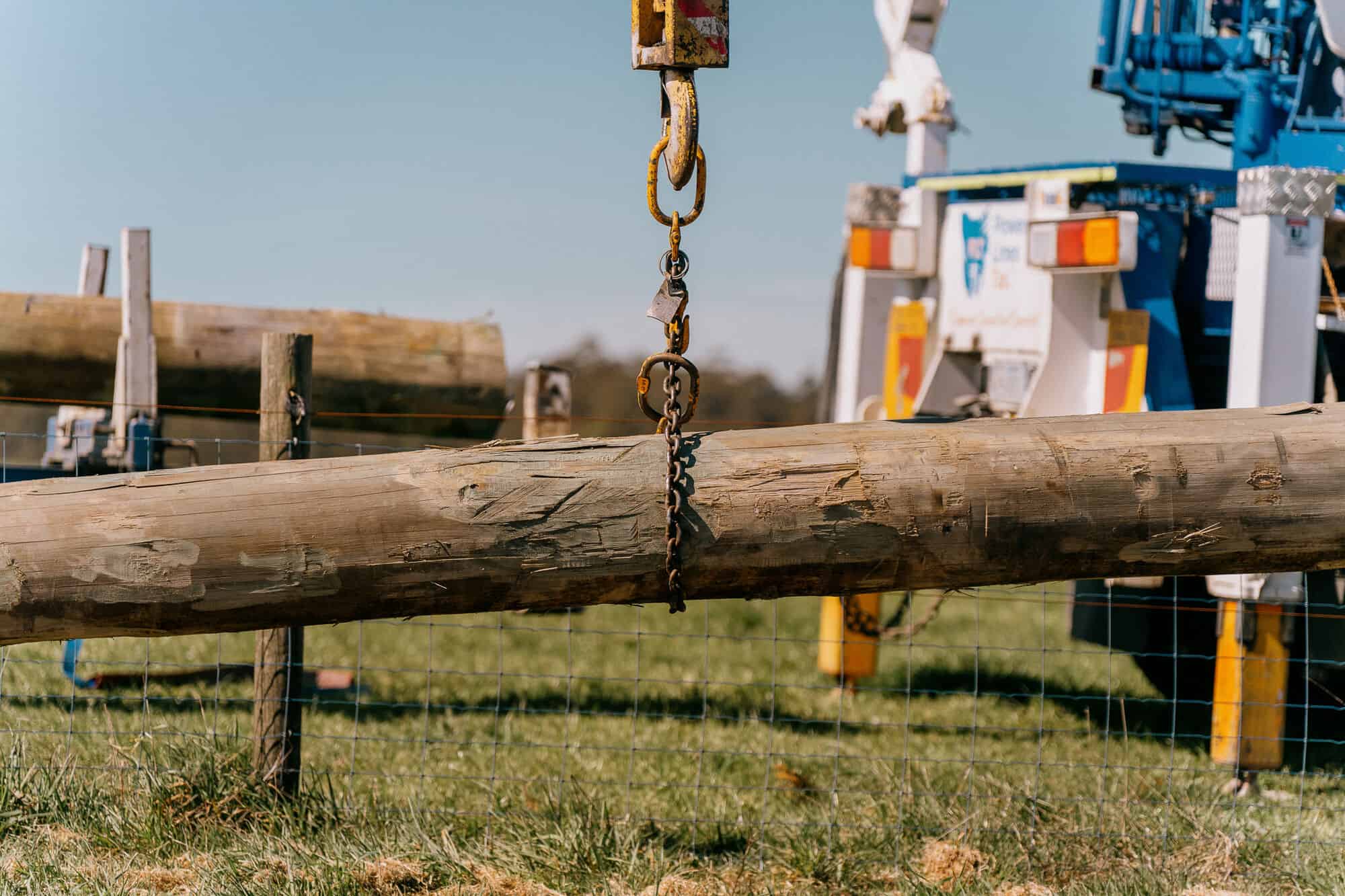
If the pole is a private pole, you are, as the property owner, and you must arrange and pay for its replacement. Poles that belong to the TasNetworks network are TasNetworks’ responsibility. Private poles and powerlines belong to the people who take their electricity supply from them, and that can include more than one customer.
A private power pole is a pole on private property that carries the powerline from the network connection point to a property or building. It is generally the first pole with the point of connection on private land and is usually marked with a yellow “PRIVATE POLE” tag. The people who take their electricity supply from it are responsible for it.
Look for a yellow “PRIVATE POLE” tag. Private poles are generally the first pole with the point of connection on private property, and carry the line to your meter box or switchboard. If you are not sure, call TasNetworks on 1300 137 008 or ask a licensed powerline electrical contractor.
The private pole and the powerline it carries are the responsibility of the customers who take supply from it. TasNetworks inspects poles and powerlines up to your meter box or switchboard. If you have poles and wires beyond the metering position, arrange for a powerline electrical contractor to inspect and test them.
TasNetworks looks after the poles and wires of the main distribution network. Poles and powerlines on private property, past the network connection point, belong to the property owner or owners. If a pole belongs to TasNetworks, report it directly on 1300 137 008. For fallen lines, sparking or any electrical emergency, call 132 004.
A pole is condemned when inspection or testing finds it is no longer safe to stay in service, for example because of damage, fatigue or deterioration. Condemned poles and wooden crossarms need to be replaced because they carry a risk of electric shock and bushfire.
Your notice sets out what must be fixed, and you should follow the timeframe it gives. Book a licensed contractor as early as you can, because quoting and scheduling take time. If you need to talk about your deadline, contact the regulator named on your letter.
Don’t. The regulator writes to the pole owner and monitors the repairs, and a condemned pole is a real electric shock and bushfire risk. If a pole poses an immediate safety hazard, power supply may be disconnected.
There is no standard price. The cost depends on the number and type of poles (timber or steel), site access and terrain, any crossarm, conductor or transformer work, traffic management, and connection and disconnection of supply. Send us your notice and pole details for a quote.
No. Never touch or climb a condemned pole, go near sagging or downed wires, or attempt a DIY repair. Replacement must be carried out by a licensed powerline electrical contractor.
Once the pole has been replaced, the regulator needs to be notified through its online private powerline work completion form so the defect notice can be closed out. Ask your contractor to make sure this has been done.
From 1 October 2026, Consumer, Building and Occupational Services (CBOS) transitioned to Consumer Affairs Tasmania and Building Standards Tasmania. Older letters and web pages may still say CBOS. Use the contact details on your notice.
It depends on the pole type, timber species and treatment, soil and climate. Timber poles deteriorate over time, which is why TasNetworks inspects and tests them regularly. If a pole fails testing it is condemned and needs replacing.